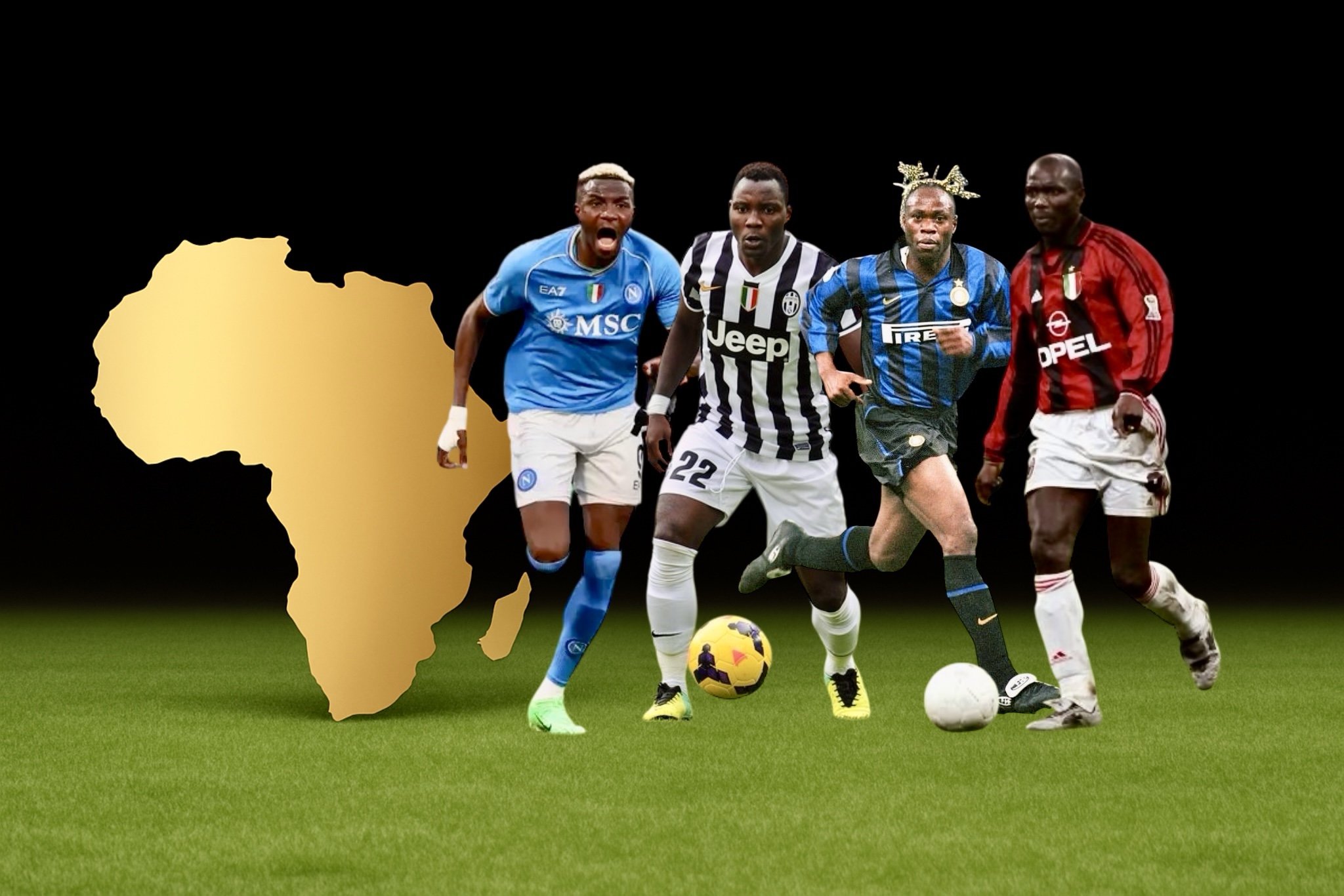
Italy’s Serie A has long been one of Europe’s prestigious leagues – and over the decades, African footballers have made a significant, though sometimes underappreciated, impact. From pioneering figures to modern-day icons, these are the players who helped shape the narrative of African influence in Italian football.
1. François Zahoui (Ivory Coast)
The first African footballer to appear in Serie A, Zahoui broke new ground when he joined Ascoli in 1981. Though his spell in Italy was short-lived and not marked by major success, his presence alone was pioneering. Zahoui later coached the Ivory Coast national team, famously guiding them to a 1–0 win over Italy in 2010—an apt twist of fate.
Embed from Getty Images2. George Weah (Liberia)
A force of nature in attack, Weah remains the only African to win the Ballon d’Or. During his time at AC Milan, he lifted two Scudetti and left fans breathless with moments of individual brilliance—none more iconic than his coast-to-coast solo goal against Verona. A true legend of both African and Italian football.
Embed from Getty Images3. Sulley Muntari (Ghana)
Discovered through Udinese’s famed scouting network, Muntari rose from promising talent to become a key member of Inter Milan’s historic 2010 treble-winning squad under José Mourinho. Over 270 Serie A appearances—including spells at AC Milan and Pescara—underline his consistency and adaptability.
Embed from Getty Images4. Kwadwo Asamoah (Ghana)
With six consecutive Scudetti and four Coppa Italia titles to his name, Asamoah is the most decorated African footballer in Italian history. A dynamic, reliable presence on the left flank, his career spanned top clubs including Juventus, Inter, and Cagliari, amassing 279 appearances in Italy’s top flight.
Embed from Getty Images5. Samuel Eto’o (Cameroon)
Already a global superstar after his success with Barcelona, Eto’o brought his winning mentality to Inter Milan, where he again secured a treble in 2010. Though his Serie A career was relatively brief, it was marked by immense impact and further solidified his legacy as one of the game’s greats.
Embed from Getty Images6. François Omam-Biyik (Cameroon)
Best remembered for his gravity-defying header against Argentina at the 1990 World Cup, Omam-Biyik helped elevate the global standing of African football. He eventually made his way to Serie A with Sampdoria in 1996, capping a career that had symbolic resonance beyond club contributions.
Embed from Getty Images7. MacDonald Mariga (Kenya)
The highest-profile East African to grace Serie A, Mariga joined Inter in 2010 and became part of Jose Mourinho’s treble-winning side. Though never a marquee name, his industrious performances and role in that historic team gave Kenyan football a rare moment in the continental spotlight.
Embed from Getty Images8. Victor Osimhen (Nigeria)
One of the most explosive forwards of the modern era, Osimhen’s breakout 2022–23 season was pivotal in Napoli’s first Scudetto win since the Maradona era. His strength, pace, and finishing made him Serie A’s top scorer—the first African to achieve the feat—and turned him into one of the most sought-after strikers in world football.
Embed from Getty Images9. Taribo West (Nigeria)
Equally known for his colourful braids and combative defending, West played a key role at Inter Milan, where he won the 1998 UEFA Cup. His switch to city rivals AC Milan was controversial, and he saw limited action behind Paolo Maldini, but his time in Italy was undeniably memorable.
Embed from Getty Images10. Mohamed Salah (Egypt)
Salah’s Italian journey was a crucial turning point in his career. After a faltering spell at Chelsea, loan stints at Fiorentina and a permanent move to Roma helped rebuild his confidence and showcased his immense talent. His performances in Serie A laid the foundation for his rise to global superstardom at Liverpool.
Embed from Getty ImagesLooking Ahead: A New Generation
African talent continues to thrive in Italy. Current stars such as Ademola Lookman (Atalanta), Samuel Chukwueze (Milan), Maduka Okoye (Udinese), and Fisayo Dele-Bashiru (Lazio) are carrying the torch for Nigeria. Ghana’s Ibrahim Sulemana (Atalanta) and Felix Afena-Gyan (Cremonese) are among those representing the next wave of talent.
Many of these players will feature in the Unity Cup, hosted at Brentford’s G-Tech Community Stadium from May 27–31—a celebration of African and Caribbean footballing heritage, with Ghana, Nigeria, Jamaica, and Trinidad and Tobago participating. Tickets are available here.


 Calcio England