Over ten million Italians left their homes at the turn of the 20th century, fleeing the grinding poverty that afflicted vast swathes of the country.
They scattered across the globe. From the ports of Palermo, Naples and Genoa, a decades-long exodus unfolded, one that came to be seen as a dark chapter in Italy’s national story.
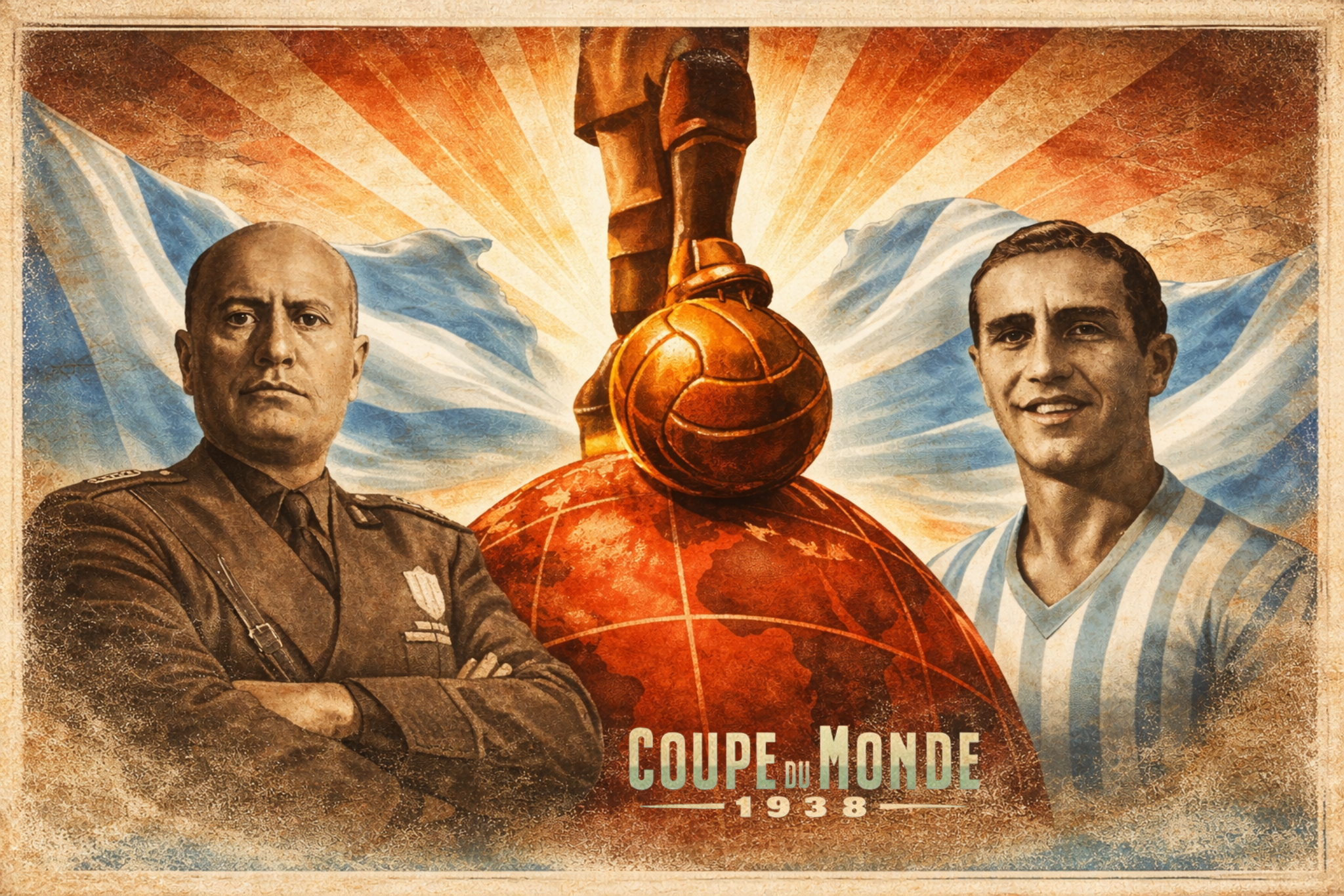
During their rise to power, Benito Mussolini’s Fascist regime cast these emigrants as symbols of weakness and disloyalty; a living indictment of liberal Italy’s failures.
Yet once in power, the regime was forced into a pragmatic shift. The demographic loss could not be undone. Instead, emigrants and their descendants were recast as Italiani all’estero – Italians abroad. At the stroke of a speechwriter’s pen, they became pioneers rather than deserters: custodians of Italianità, bound to the nation by blood if not by soil.
It was this reframing that opened the door for oriundi to shape Italian football.
Julio Libonatti led the way. An Argentine international of Italian extraction, he joined Torino in 1925. Others quickly followed. Soon, clubs across Italy were feverishly mining this rich seam of South American talent with Italian roots.
No club pursued this policy quite like S.S. Lazio.
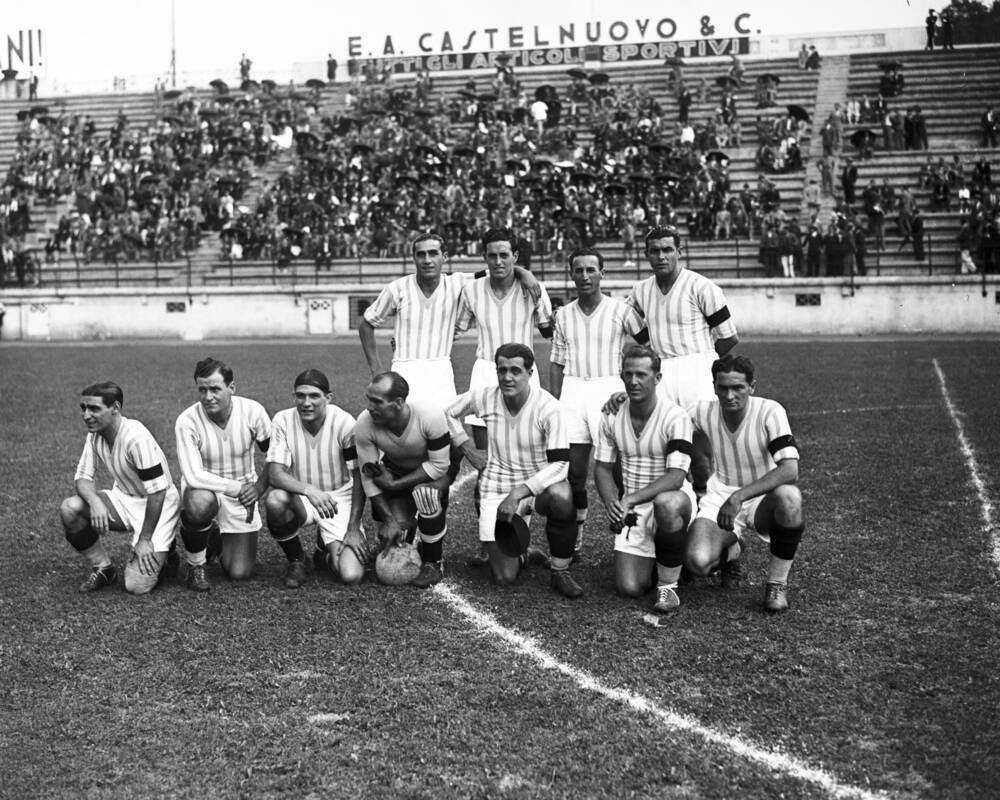
Under President Remo Zenobi, a businessman with ties to Brazil, Lazio leaned heavily into the oriundi market. The recruitment began with cousins João and Otávio Fantoni from Palestra Italia (modern-day Cruzeiro). By the start of the 1931/32 season, Lazio had assembled nine Italo-Brazilians, supplemented by two more on the coaching staff. The press dubbed them Brasilazio.
In 1932, a third Fantoni arrived.
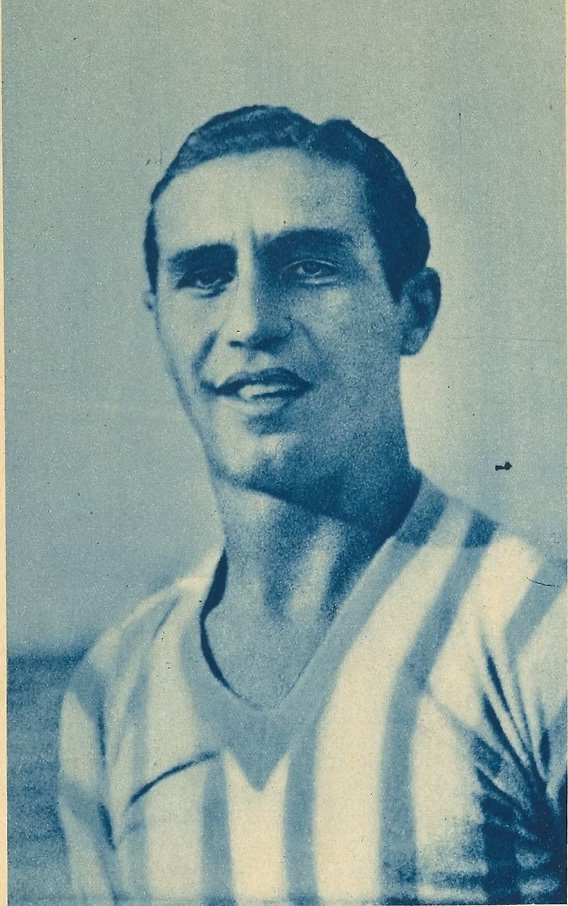
Leonizio Fantoni, the brother of João, was just 20 years old but had already earned a formidable reputation as a goal scorer in Brazil. In his breakthrough season, he fired Palestra Italia to the Mineiro State Championship with an astonishing 33 goals in 21 games.
A plethora of nicknames for this young starlet told their own story. Menino Metralha (Machine Gun Boy) for his ferocious shooting. Tanque (Tank) for his physicality. And, most enduringly, Niginho (Little Boy), an ironic moniker for a striker standing well over six feet tall.
Lazio’s latest import made a promising start: six goals in four friendlies. La Stampa praised his pace, control, and powerful, two-footed finishing. Despite the fanfare, Niginho struggled to establish himself in Rome in the same way that his brother and cousin had done. He took to the pitch just twice during the season proper.
The outlook improved the following season with a change of coach and a return of 8 goals from 21 matches. A hat-trick scored against Milan undoubtedly representing the high-water mark of his Lazio career. In truth, Niginho’s lukewarm form was emblematic of Lazio’s faltering Oriundi project, which led to consecutive 10th place finishes. *
The arrival of the gifted young Italian forward Silvio Piola in 1934 served to marginalise Niginho at Lazio. As Piola soared, Niginho was grounded. Forced to reprise the role of first reserve, he mustered just two appearances all season. Off the field, he and Lazio were touched by tragedy when his cousin Otávio died suddenly from complications arising from a facial injury sustained against Torino.
The rise of the oriundi was not without controversy.
On the eve of Italy’s 1934 World Cup campaign, coach Vittorio Pozzo was forced to defend his selections: “If they can die for Italy, they can play for Italy”. It was a line heavy with implication. These players held Italian passports. In theory, they shared not just privilege, but obligation.
By 1935, that implication threatened to become reality.
With an Italian invasion of Abyssinia (Ethiopia) on the horizon, military conscription loomed. The Oriundi had been willing to make Italy their home, enticed by generous financial terms. But a more fundamental question lingered beneath the surface: would they be willing to fight, and die, for Fascist Italy? The issue struck at the core of the regime’s narrative, which sought to present the global Italian diaspora as a cohesive, loyal extension of the nation.
The Fantoni family, up to this point, had coexisted comfortably with the prevailing political climate in Italy. When João Fantoni’s second child was born, Benito Mussolini’s Lazio-supporting son promised to cover the hospital bill if João scored in the next match. He did, and Mussolini honoured his promise. As a mark of gratitude, the child was christened Romano Benito Fantoni.
As the 1934/35 season built to its climax, Niginho abruptly departed Lazio – and Italy. The precise details of his exit from the Eternal City remain shrouded in mystery, but the upshot is that he never played for Lazio again.
Some sources suggest that Niginho returned home to South America pre-emptively, anticipating the military call, with Lazio’s blessing and the club paying for his passage. An alternative version has it that he was summoned for military service and orchestrated his own clandestine escape to Brazil via France, Spain and Portugal.
Whatever the truth, the implications were deeply uncomfortable for the regime. Niginho’s apparent flight – whether anticipatory or evasive – undermined the Fascist claim that Oriundi were bound to Italy not merely by ancestry, but by duty. That this episode involved a player from Lazio, a club synonymous with the Mussolini family, only heightened its symbolic resonance. Niginho’s desertion exposed the fragility of the regime’s efforts to transform ethnic identity into political loyalty.
La Stampa newspaper (11 April 1935), perhaps under political duress, offered a face-saving variant of the latter theory. They report that Niginho had secretly fled on a passport issued by the Brazilian Consul in Rome and that he was not, in any case, eligible for military service having completed his obligations in Brazil.
Back in Brazil, Niginho rediscovered his golden touch.
First, with Palmeiras, he won the 1936 São Paulo State Championship. Then, with Vasco Da Gama, he won the 1937 Carioca State Championship, finishing as top scorer. His phenomenal goalscoring record earned him a place within the Brazil squad for the Campeonato Sudamericano (Copa America), where they finished as runners-up to hosts Argentina, and then in the Seleção party that set sail for the 1938 World Cup in France.
With some trepidation, Niginho was returning to Europe for the first time since controversially leaving three years earlier. Under different circumstances, he might have been lining up for reigning champions Italy, alongside his former Lazio team-mate Piola. Instead, he wore the white of Brazil and found himself on a collision course with Italy.
The political stakes were obvious.
Even before a World Cup ball had been kicked, Italy’s delegation intervened to bring Niginho’s irregular circumstances to the attention of FIFA, arguing that he was in breach of his Lazio contract by playing back in Brazil.
As if fate had already decided, Brazil and Italy were paired in the semi-final. Furthermore, an injury to their star striker, Leonidas, meant that Brazil needed to turn to a replacement.
Niginho was the natural choice. But amid Italy’s protests, the Brazilian delegation felt they had no choice but to leave him in reserve. Confined to the role of spectator at Marseille’s Stade Velodrome, Niginho was powerless as a patched-up Brazil team fell to a 2-1 defeat.
Italy progressed and went on to defend their crown.
Niginho returned to Brazil and eventually rejoined Cruzeiro, continuing to score freely at state level for years. But the episode in France lingered. Despite his ability, he was never again called up by the national team.
A career that had crossed continents – and collided with politics – had, in the end, been quietly curtailed. Niginho had evaded the grasp of Fascist Italy in 1935, only to encounter its long shadow in Marseille three years later.

 Calcio England