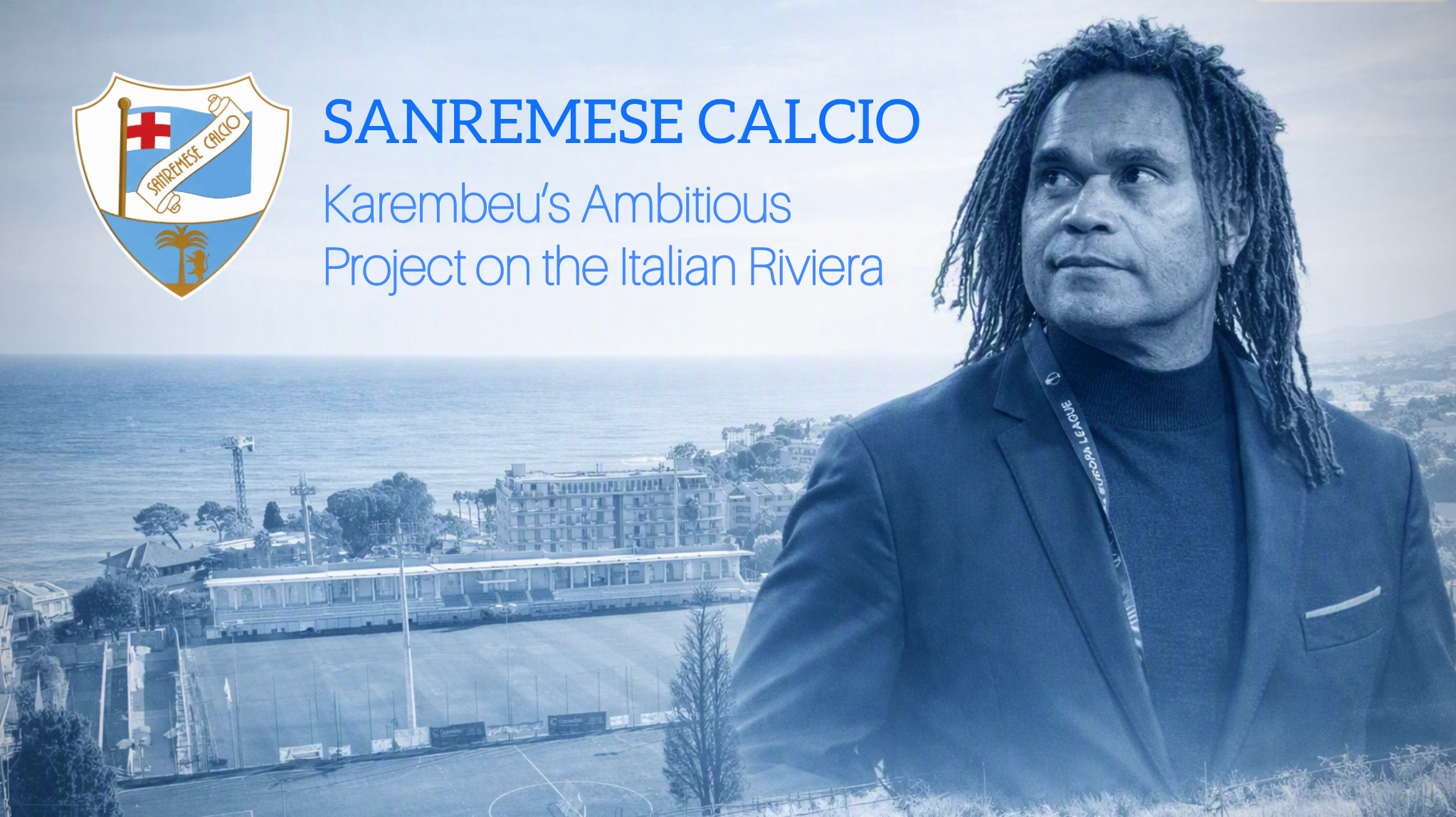
Sanremo is a place that seems tailor-made for aspiration.
Crystal blue waters lap against the Ligurian coastline, palm trees sway in the sea breeze, and grand hotels are framed by the dramatic peaks of the Maritime Alps. For well over a century, this jewel of the Italian Riviera has attracted wealthy visitors in search of sunshine, relaxation and a touch of glamour.
Just a short drive from Monte Carlo, Sanremo is best known for its famous music festival, its historic casino and picture-perfect scenery. Yet behind the polished image of one of Italy’s most elegant seaside destinations lies a football club whose story has been considerably less glamorous.
Sanremese Calcio have spent much of their existence far from the spotlight enjoyed by the city they represent. A brief spell in Serie B during the inter-war years remains the high-water mark in the club’s history, while the decades that followed proved far more turbulent. Beginning in the mid-1980s, the Biancazzurri endured a series of financial crises that saw the club fold and restart from the lower reaches of the Italian football pyramid no fewer than four times.
Stability, however, has finally returned. This year marks Sanremese’s tenth consecutive season in Serie D, a significant achievement for a club that spent much of its recent history battling simply to survive.
Now, for perhaps the first time in generations, there is a sense that something bigger may be possible.
That optimism emerged in November 2025 when former France international and World Cup winner Christian Karembeu acquired a majority stake in the club alongside Franco-Swiss entrepreneur Theodoros Ornithopoulos. Given Sanremo’s idyllic waterside location, comparisons with the ambitious projects at Como and Venezia were inevitable.
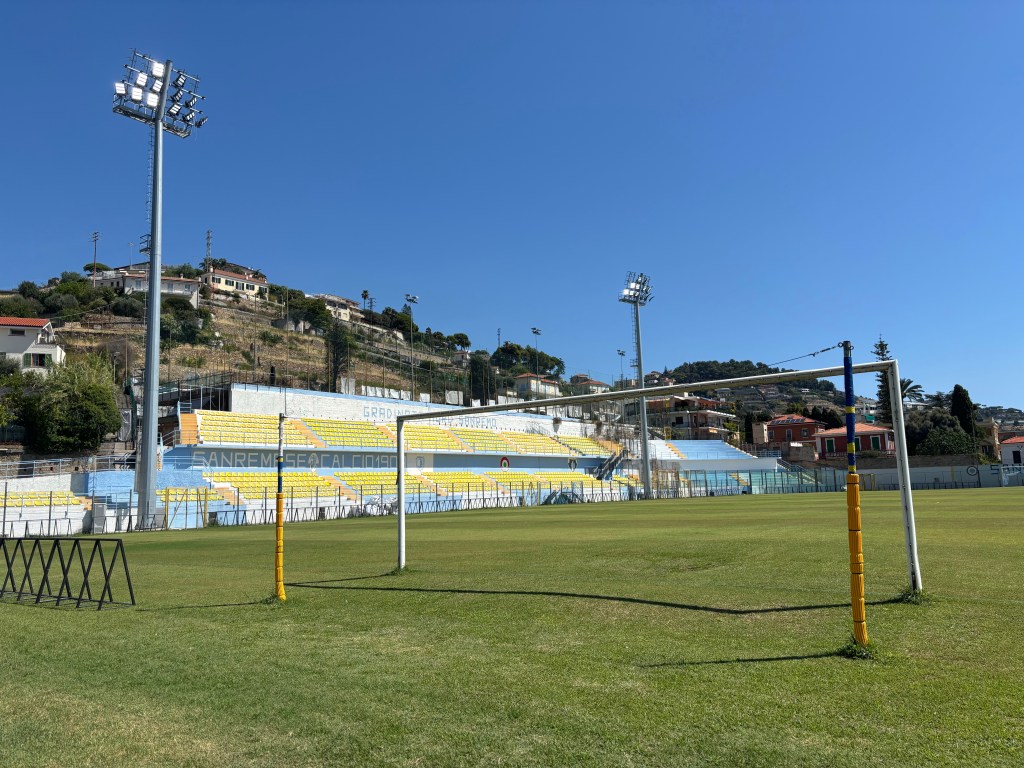
The appeal is obvious. Sanremese’s Stadio Comunale is etched into the hillside, overlooking the city, just a stone’s throw from the endless blue waters of the Mediterranean. As football investments go, there are certainly worse places to spend your time.
The first few months have brought a steady procession of A-list visitors, from Paul Pogba and Claude Makélélé to William Gallas and Robert Pirès. But when the conversation turns to where it might all lead, Karembeu is careful to temper the ambition with a sense of perspective.
“We want to reach the top. There is no limit,” he said.
Yet he was equally keen to stress that sustainable growth would take precedence over quick fixes. That is an important distinction in the lower reaches of Italian football, where ambitious projects have all too often ended in financial difficulty. Investment in the youth sector and improvements to infrastructure have been identified as the cornerstones of the project.
The first major statement of intent arrived in the form of another globally recognised name. Clarence Seedorf, Karembeu’s former teammate at Real Madrid, was appointed to oversee the club’s youth sector, underlining the new ownership’s commitment to long-term development.
Progress on stadium redevelopment is likely to prove a slower process. The municipally-owned ground remains one of the most distinctive venues in Italian football. Its main tribuna is decorated with classical-style pillars and Carrara marble interiors, yet it also bears the scars of its 94-year history. With just two functioning stands and a capacity of 4,000, modernisation is both desirable and necessary if Sanremese are to continue climbing the ladder.
On the pitch, the new ownership group have so far resisted the temptation to completely overhaul the squad.
Many of the side that finished seventh in Serie D last season has been retained, with the most significant change taking place in the dugout. Former Middlesbrough defender Gianluca Festa has been handed the task of leading the project forward, returning to Italy after coaching spells in Greece and Malta.
The headline signing of the summer has been former France international Yann M’Vila. Now 36, the midfielder may no longer possess the dynamism that once made him one of Europe’s most coveted prospects, but he should still have more than enough quality to dictate matches in Italy’s fourth tier.
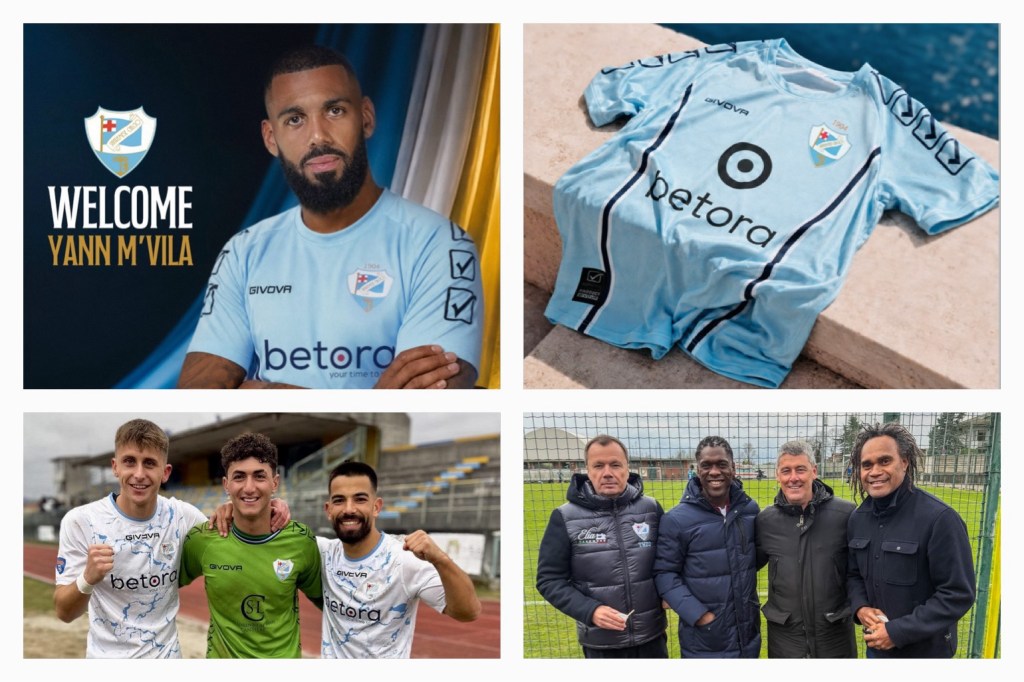
Around him is a squad filled with familiar surnames and experienced lower-league operators.
Among them is Oan Djorkaeff, son of former France star Youri Djorkaeff. The 29-year-old scored ten goals in 34 appearances last season and remains a key attacking figure. He is expected to form a partnership with Simone Ganz (32), son of former Milan striker Maurizio Ganz. The veteran forward and Festa have fond memories together after securing promotion to Serie B with Como more than a decade ago.
Youth development remains a central pillar of Sanremese’s strategy, helped by Serie D regulations that require clubs to field a minimum quota of young players. During the 2026/27 season, teams must always have at least one player born in 2006, one born in 2007 and one born in 2008 on the pitch.
Sanremese have responded by recruiting several promising youngsters. Diminuitive midfielder Carlo Usai (2006) has arrived from Cagliari’s academy, while the combative Lorenzo Appiah (2007) joins on loan from Sassuolo. The club have also brought in French winger Miaronald Racot (2008) from fifth-tier side Linas-Montlhéry.
Another interesting name to watch is London-born attacking midfielder Luka Radojevic (2008), who spent last season with OFK Belgrade following his departure from QPR and has been training with the club throughout pre-season.
That youthful core has been supplemented by a number of players with proven experience in Italy’s lower divisions and abroad.
Goalkeeper Alex Sposito (25) arrives looking to reignite a career that stalled after several years as a reserve in Serie B and Serie C. Behind him, Belgian-born goalkeeper Ayman Azaze (24) offers an intriguing backstory, having previously come through the ranks at Barnet before playing for Cheshunt in England’s Isthmian Premier League last season.
Further forward, Dennis Costantino (25) joins after scoring ten goals for Varesina (Serie D) last season, while Lithuanian international Augustinas Klimavicius (25) arrives following a prolific campaign with Sestri Levante, where he found the net 12 times in 26 matches.
Defensively, Sanremese have largely kept faith with the group that served them last term. Captain Arensi Rota (30) remains the leader of the back line alongside Edoardo Grosso (23) and Alessio Girgi (26). The principal addition is experienced Macedonian centre-back Konstantin Cheshmedjiev (30), who arrives from Iceland for his first venture into Italian football.
For all the talk of long-term planning, however, results will still matter.
Karembeu has attempted to temper expectations, but promotion to Serie C will undoubtedly be one of the primary objectives this season. The challenge is formidable. Only one automatic promotion place is available from each of Serie D’s regional divisions, leaving little margin for error.
Among Sanremese’s principal rivals are Genoa-based Ligorna, who finished second last season, newly relegated AC Bra and Alessandria, another historic club attempting to rebuild following bankruptcy.
The journey begins this weekend with a local derby against Imperia in the Coppa Italia Serie D, a fixture that should provide an early indication of where Festa’s side stands.
Whether Sanremese can emulate the rise of Italy’s fashionable football projects remains to be seen. History shows that for every fairytale, there is a considerably longer list of projects that have failed to deliver, leaving those clubs in serious difficulty. For Sanremese, the real measure of this new era will ultimately be whether ambition can be matched by sustainability.
What is clear is that, after decades defined by instability and survival, the club finally has momentum – and a clear vision for the future.
Throughout the season, we’ll be keeping a close eye on how the project develops on one of the most beautiful stretches of coastline in European football.


Awesome article! Keep up the good work 🙌🏼
LikeLike
Just…follow as…! And we hope one day to be back in profecional LEGA PRO for to show to everyone howe is beatifull to support this team…and howe so beautifull to play in this team ⚪️🔵❤️🥷 GNS ( GRADINATA▪︎NORD▪︎SANREMO▪︎ULTRAS )
LikeLike